KNOW-HOW![]()
The Complete Guide to Robotic Field Line Painting
Painting Sports Fields in Half the Time
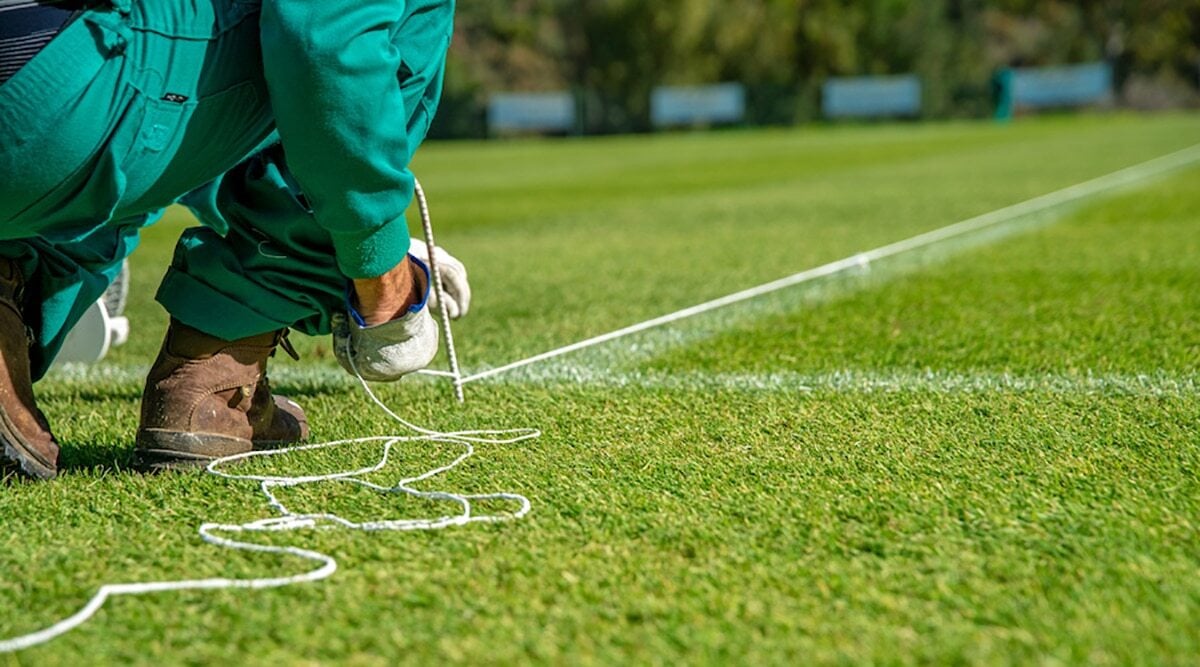
For any field manager and their crew, laying out and painting sports field lines is a time-consuming process, requiring hours of manual stringing and lining, as well as numerous crew members to pull it off. Even with the most skilled and experienced crews, manual field layout leaves ample room for human error. For those maintaining fields for a school, park district, or club team, wonky lines can leave a less-than-desired impression on athletes and spectators alike.
When it comes to mowing, seeding, and aerating fields, along with other duties, new technologies have made these jobs faster and more efficient. Yet, sports field line painting has been slower to evolve. As a result, crews are still spending untold hours painting fields more often than necessary, scrambling to meet the demands of their busiest seasons, and falling behind those higher-level tasks that take their fields and facilities to the next level.
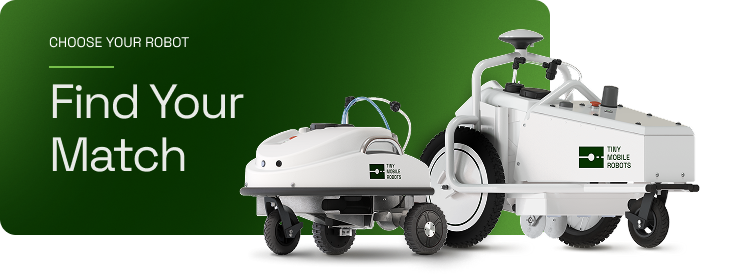
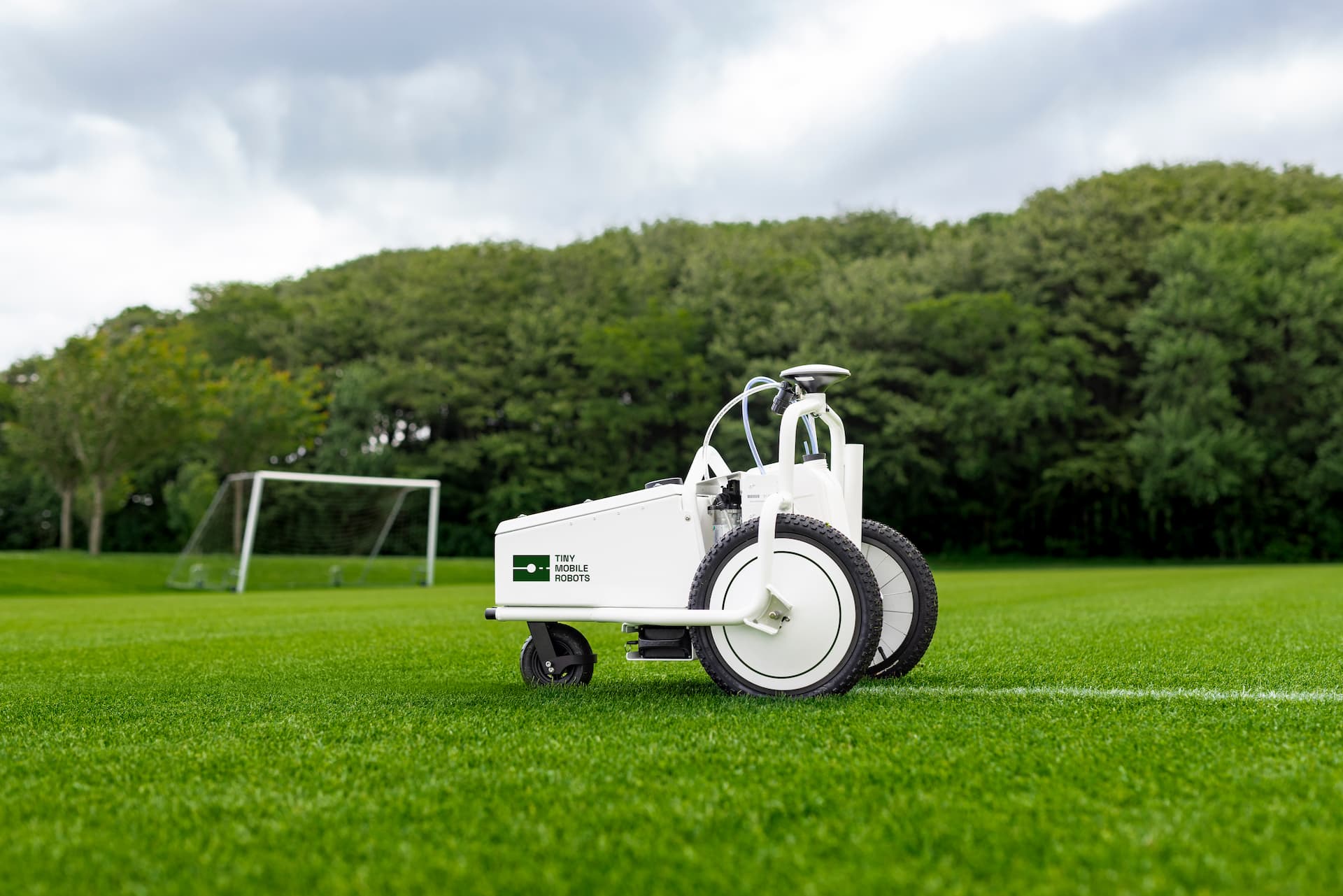
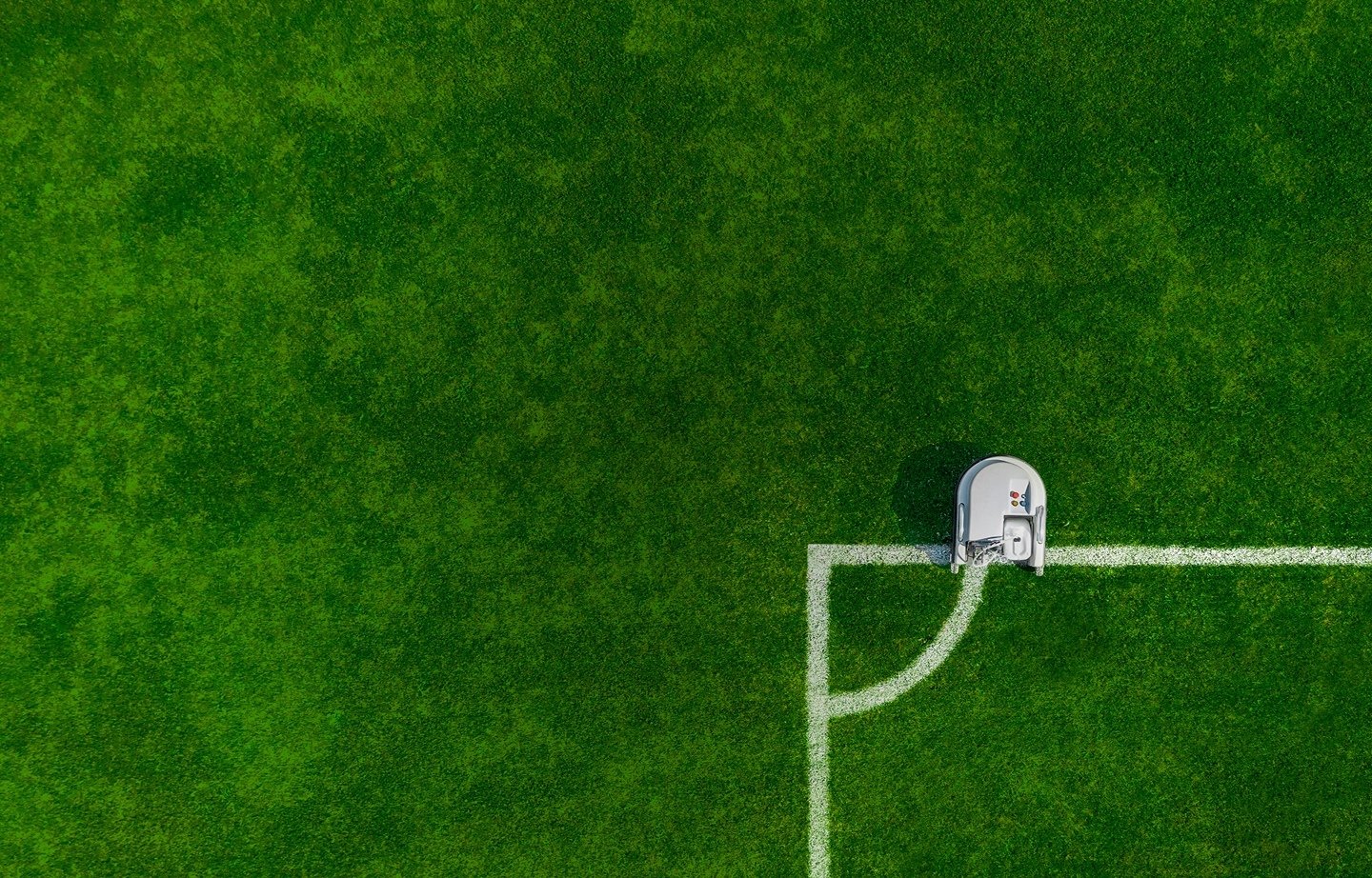
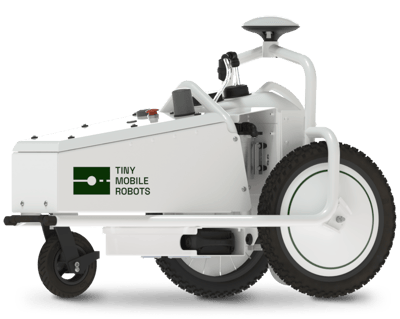
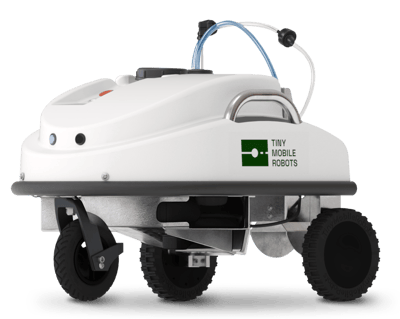
To save time and resources, a field manager can deploy a robot like TinyMobileRobots and focus on the many other tasks involved in preparing a sports field for play. Paint complex arcs and lines with great accuracy and minimal supervision, freeing up managers’ time for other important aspects of field maintenance. Solutions like sports field line painting robots are especially useful for grounds crews responsible for multiple fields or multiple sports layouts per season. Automation and readily available templates enable the robot to mark accurately, saving labor hours for other essential field maintenance tasks and conserving paint for future use.
The Challenges in Sports Field Line Painting
There’s no doubt that sports field line painting is a challenging task that requires thoughtful planning and a highly specialized skill set. Compared to other tasks, sports field line painting presents unique challenges.
Initial Layout of the Field
Laying out and painting field lines on fresh, unmarked turf is the most difficult and labor-intensive aspect of sports field line painting.
The challenge arises when crews must paint multiple fields within a short period. For example, when spring comes around, crews must lay out and paint field lines to prepare for the spring season, long after the previous season’s lines have been washed away. As summer winds down, crews must remove the field lines for spring sports and lay out lines for fall sports.
Special events, such as tournaments and youth camps, can have crews working from sunrise to sunset for weeks as they lay out and paint field after field, sometimes dozens. After the tournament is over, they may have to remove and re-paint the original fields that were there before.
Field Dimensions
Differences in field dimensions among variations of the same sport can get quite granular. For example, the official rules and dimensions of an NFL flag football field differ from those of a traditional American football field, with distinct widths and end zones. Women’s lacrosse fields feature arched lines mirrored on each side of the layout, demanding exact measurements and symmetry, while men’s lacrosse fields lack these features.
Then there are other challenges, like scaling a regulation field down for kids’ competition or small-sided play. Sometimes, fields must be sized to fit a particular space.
Crews must map out these dimensions and execute them, which requires substantial planning and calculation. After all, field dimensions come with high stakes, especially in high school and collegiate sports, where an irregular field can result in penalties for the hosting organization.
Accuracy
The quality of the field reflects the quality of the organization, whether it is a parks and rec department, a high school athletics department, a club team, or a collegiate campus rec or club sports program. Creating an elite atmosphere relies on surgically precise lines and additional details, such as endzone lettering and sponsorship logos.
Yet when pulling an entire soccer field sideline, it’s almost impossible for a crew member to achieve a perfect line by hand. Even using a stencil, manually painting dozens of hash marks on a football field invites plenty of human error.
High-quality fields directly correlate with business value. The look and feel of an organization’s facilities can make a significant difference in recruiting athletes, securing sponsors, and attracting more activities to the park or school.
The Pain Points of Painting Field Lines Manually
Meeting these challenges is difficult when performed manually and can run crews ragged. By overcoming these manual pain points, sports field line painting no longer sucks away hours and money from your teams and budget.
Labor-Intensive
Sports field line painting simply takes too many people and too much time.
-
An 11v11 soccer field can take upwards of two hours to paint manually.
-
A football field can take four hours to paint, six hours with hash marks.
-
A girls' lacrosse field can take five hours to paint.
-
A regulation rugby union pitch can take six hours to paint.
Laying out a single field can take three or more people. Every organization, whether it's a professional turf crew, a school grounds crew, or a parks and recreation crew, feels there aren’t enough hours in the day to meet all its responsibilities. Plus, they are burned out. This is why crews face so much turnover and struggle amid a labor shortage.
If crews could shave time from the hours it takes to paint fields, they could get to other higher-value tasks that would improve the facilities and finally tackle deferred maintenance.
Specialized Skill Set
Painting field lines isn’t something you can just figure out as you go along. The crew members leading the charge often have a well-honed process they’ve developed over years of practice.
Reliance on this specialized skill set puts even more pressure on crews. When one of these field painting pros retires, replacing them can be a nightmare. With so many fields to paint, these pros are in high demand; so much so that organizations sometimes spend thousands on third-party vendors to come in and paint the initial field layout.
If sports field line painting were easier, organizations would have more flexibility in distributing this workload. Even volunteers, interns, and new hires could help lessen the load.
Repainting Original Field Lines
The initial field layout requires so much work that crews spend inordinate time and expense repainting fields just to maintain the original lines.
They must paint:
-
Even when the field isn’t in use for weeks at a time, for example, when the team has a series of away games.
-
When rain, wear and tear, and mowing diminish the original lines.
-
In preparation for game day, to achieve the desired brightness.
One TinyMobileRobots client spent weeks painting fields in preparation for a tournament, and by the time they’d laid out the final fields, several of the earlier ones already needed repainting.
Of course, each repaint becomes a copy of a copy of a copy of the original field. That is, the field's quality will deteriorate with each round of manual painting.
How much paint, time, and manpower could an organization save if it didn’t have to repaint field lines needlessly? How much more could they get done, and how much more value could they drive for the organization?
Efficiency Gains with GPS-Powered Sports Field Line Painting Robots
To date, innovations in sports field line painting have failed to solve these pain points.
Laser-based line marking systems and rolling push painters only alleviate a fraction of the manual work and the likelihood of human error. Field painting robots have required complicated base stations to set up and run with each round of painting.
But GPS-powered field painting robots may be the game-changer that crews and organizations have been waiting for.
-
A tablet-based drag-and-drop Google Maps interface enables users to place fields exactly where they need them, eliminating the need for pre-painted layouts.
-
They come with hundreds of pre-loaded templates that can be sized and customized with just a few taps — no math is involved, and no special skills are needed.
-
They are surgically accurate and paint crisp, bright lines the first time — instantly elevating the quality of the field.
-
They remember previous layouts and fields you use — so you can recreate them exactly with just a tap.
-
They can paint custom designs uploaded to the tablet, allowing you to create sponsor revenue.
-
They run autonomously, painting fields in a third of the time it would take by manual means — allowing crews to multi-task while the robot runs and ultimately get more done.
These machines are so easy to use that anyone can operate them, and it only takes about 10-15 minutes to train a new user to use them successfully. Organizations using field painting robots no longer have to paint lines just to maintain the original layout. Their crews have hours back each day that they can spend on other tasks, such as weed eating, aerating, picking up trash, and more. Instead of spending hours painstakingly painting hash marks, they can elevate the field by focusing on more creative designs and details.
Instead of preparing for tournaments weeks in advance, they can put down fields the day before or even the day of. The ability to resize fields through the tablet enables teams to better plan for play and utilize the available space more effectively.
Of course, at the highest level of play — collegiate and professional sports — painting the field manually is a revered and respected ritual. A field painting robot can actually free up more bandwidth for the game field by minimizing the work of maintaining practice fields or setting up fields for youth camps or intramural play.
Although field painting robots often come with a significant price tag, they typically pay for themselves within just a few seasons based on paint savings alone.
A TinyMobileRobots Success Story
Sylvania Recreation, based in Sylvania, Ohio, is a bustling parks and recreation organization that operates several facilities, including the 140-acre Pacesetter Park. Home to a club league, Sylvania Recreation must lay down 25-30 soccer fields in preparation for the season.
After discovering TinyMobileRobots on Twitter, Sylvania Recreation Facilities and Maintenance Director Brian Hall led the organization in purchasing a field painting robot. He compiled data over two years to compare the cost of field painting before and after adopting the field painting robot.
| 2021-No Robot | 2022-With TinyMobileRobots | |
| Number of fields painted | 29 | 32 |
| Man hours/Cost | 82.75/$1,961.18 | 22.75/$555.10 |
| Gallons of paint used | 90.75 | 20.45 |
Hall said the biggest selling point for the robot was its accuracy. The ability to sit in the office and plan out 30 fields across the facility with absolute accuracy was a game-changer.
The quality of the field painting, he said, helps deliver a high-quality experience that validates parents’ investment in their athletes’ club membership and draws more business as the go-to place to hold tournaments across many sports.
Take the Pain Out of Sports Field Line Painting
Solving the problems of sports field line painting can be the key to maximizing your crew members' potential and elevating the atmosphere of your facilities to the next level. As new sports become popular, whether it be flag football, ultimate frisbee, or Quidditch, crews must be able to adapt and provide exceptional experiences.
A field painting robot can pay for itself in a single season for high-volume users, such as parks and recreation departments or sports complexes. For high school and collegiate athletic departments, the value of the robot becomes evident practically immediately.
TinyMobileRobots streamlines painting for all types of sports and organizations. We help crews stop sweating their lives away from painting fields and help organizations deliver a professional-grade field at any level.
We’ve designed our robots to be the simplest and most user-friendly machines out there. To see how your school or organization could benefit from TinyMobileRobots, reach out to us to learn more or set up a demo to paint one of your fields. We’ll come out to your school with a robot and answer all your questions in person — at no cost.
PREMIUM GUIDE![]()
Everything to Consider Before Buying a Robot
The Strategic Buyers Guide.
Explore our Robots
DISCOVERY CALL![]()
In doubt about your needs?
Let us guide you
Related Posts
SEE ALL